Walk into any kratom shop and you’ll see a rainbow of “strains”: Red Bali, Green Maeng Da, White Borneo, Yellow Vietnam. But here’s the honest truth most brands won’t tell you: “strain” mostly describes processing method and marketing — not botanical variety.
What ‘Strain’ Really Means
In the kratom world, the color names (red, green, white, yellow) traditionally referred to how the leaves were dried. Red = longer drying and fermentation, green = standard indoor drying, white = short-drying with sunlight. These processes do change the alkaloid profile to some degree.
The plant itself is one species — Mitragyna speciosa — and regional names like Bali or Borneo usually describe where it was grown, not a distinct variety.
Does Strain Matter for 7-OH Cans?
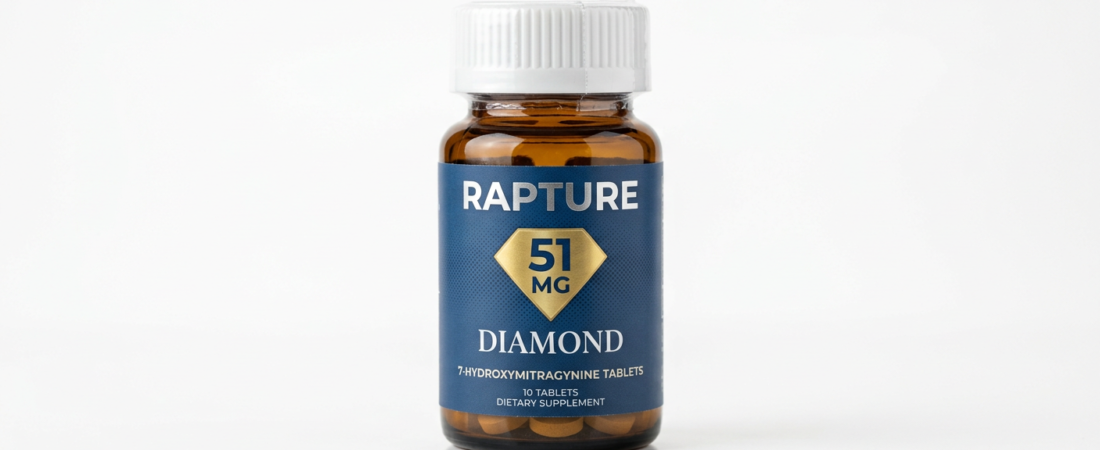
Here’s where modern products changed the game. When 7-hydroxymitragynine is extracted and concentrated into a can, the leaf’s “strain” differences matter far less. What matters is alkaloid content — which is why Rapture publishes measured percentages rather than strain folklore.
Our cans focus on what you can verify: precise milligrams and third-party lab results. Learn to read a lab report and you’ll see exactly what’s in each can.
Red, Green, White: What Users Report
| Color | Traditional use | Character |
|---|---|---|
| Red | Evening | Often described as more soothing |
| Green | Daytime, balanced | Often described as balanced and versatile |
| White | Morning | Often described as more energizing |
Strains vs Cans: What to Choose
If you want the traditional experience, powder and capsules still exist. If you want precision, kratom seltzers are the modern answer. For a fast onset, shots shine. Our guide comparing seltzers will help you decide.
The Bottom Line
Judge a kratom product by its lab results, not its color-coded name. Start with a low-dose can, track how you respond, and let data — not marketing — guide you.