Every serious kratom brand says “lab tested.” Few buyers know how to check whether the tests are real and meaningful. This guide closes that gap — the single most valuable five minutes you can spend as a kratom buyer.
What a COA Is
A Certificate of Analysis (COA) is a lab report documenting what’s in a specific batch of product: its alkaloid content and its purity. It’s issued by the lab — not the vendor — with the lab’s own sample tracking number.
Check #1: Is the Lab Independent and Accredited?
Look for ISO 17025 accreditation — the international standard for testing labs. A vendor-owned “lab” or a screenshot with no lab identity is not a COA. The report should name the laboratory, its address, and an analyst signature.
Check #2: Does the Batch Match Your Bottle?
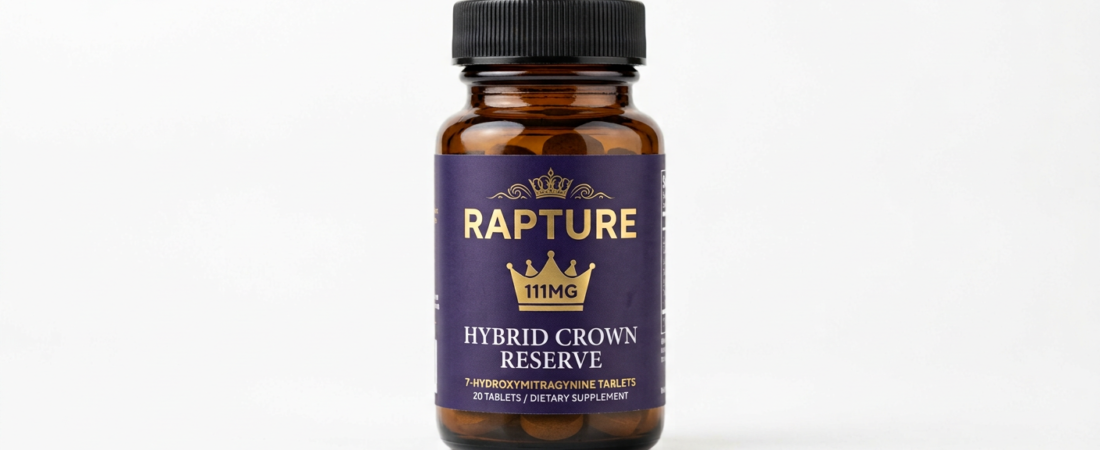
The COA must list a batch or lot number that matches the one printed on your product. A generic report on the website isn’t proof your bottle was tested. This is why every Rapture bottle carries a batch number you can cross-check. Batch traceability is the core of GMP.
Check #3: Potency Numbers
Look for mitragynine and 7-hydroxymitragynine quantified as percentages or mg/g. For a 100mg MIT can, the COA should show alkaloid content consistent with the label claim — within normal manufacturing tolerance.
Check #4: Purity Panels
| Panel | What it checks | Passing result |
|---|---|---|
| Heavy metals | Lead, arsenic, mercury, cadmium | Below state limits (e.g., <1 ppm each) |
| Microbials | E. coli, Salmonella, yeast & mold | Absent / below detection |
| Residual solvents | Extraction chemical leftovers | Below USP limits |
Check #5: Reading the Fine Print
A real COA has a test date, an expiry/report date, and a disclaimer about the sample tested. If the document looks like a JPEG from 2019 with no lab name — that’s marketing, not science.
Where to Find Ours
Every Rapture batch ships with its COA published in the product gallery and on request. We answer your batch-specific questions fast — contact us — and the FAQ library explains testing in more depth. When you buy a Rapture kratom seltzer, the label represents verified chemistry.