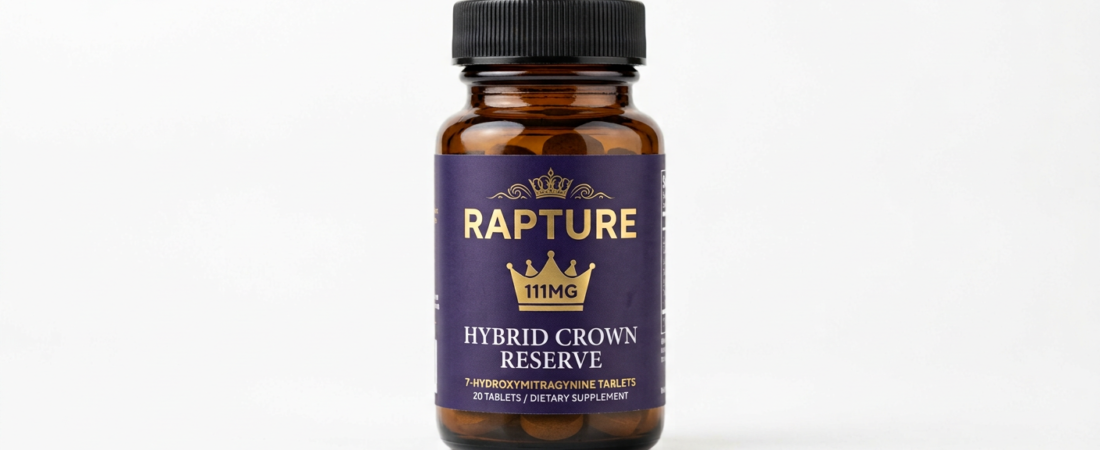
Kratom’s effects come from a cocktail of alkaloids, but two headline acts dominate: mitragynine and 7-hydroxymitragynine. If you’ve ever wondered why some kratom products are measured in grams and others in milligrams, this is the explanation.
The Two Alkaloids at a Glance
| Mitragynine | 7-Hydroxymitragynine | |
|---|---|---|
| Share of leaf | ~1–2% of dried leaf | Trace amounts naturally |
| Typical serving | 1–5 grams (powder) | 5–100mg (cans) |
| Receptor affinity | Lower | Much higher |
| Format | Powder, capsules | Cans, shots, extracts |
What Mitragynine Does
Mitragynine is the workhorse alkaloid in plain leaf. It’s present in large amounts but binds relatively weakly, which is why traditional kratom powder servings are measured in grams. Many users describe plain-leaf kratom as a broad, gentle botanical.
What 7-Hydroxymitragynine Does
7-OH binds to opioid receptors with much higher affinity than mitragynine — one reason its effects come on with far less material. It’s also the reason modern products like 100mg cans can deliver a clean, predictable serving the size of a coin.
How They Interact
Researchers believe the two alkaloids work together — a concept called the entourage effect. Mitragynine may even convert to 7-OH in the body. This synergy is why some users prefer full-spectrum blends and why our 175mg Berry Blast exists.
Which Should You Choose?
If you want the traditional, broad experience: powder or capsules. If you want precision and portability: kratom seltzers. If you want speed: a chilled 100mg seltzer. Start low — the 55mg starter can is built for first-timers — and read our dosing guide before your first serving.